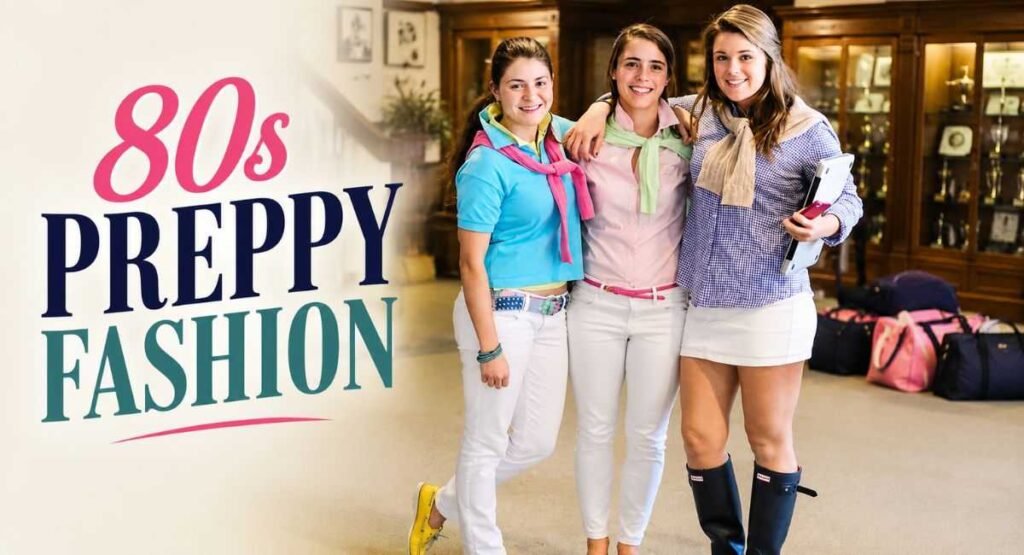
80s preppy fashion captured the polished confidence of Ivy League-inspired dressing while adding the bold colors and playful energy that defined the decade. From polo shirts and cable-knit sweaters to pleated skirts, loafers, and tailored blazers, this timeless style blended sophistication with everyday comfort.
Today, it continues to influence modern wardrobes because it feels both classic and versatile. Whether you love vintage trends or want to recreate an authentic retro outfit, understanding the key elements of preppy style, Ivy League fashion, collegiate outfits, 80s fashion aesthetic, and classic preppy clothing will help you build effortlessly stylish looks that never go out of fashion.
What Is 80s Preppy Fashion?
At its core, 80s preppy fashion is a polished take on collegiate dressing inspired by Ivy League campuses and classic New England leisurewear. The look favors clean silhouettes, coordinated layers, and recognizable preppy clothing such as polo shirts, button-downs, chinos, blazers, cardigans, and loafers. Yet it wasn’t completely stiff or conservative. Bright colors, graphic patterns, relaxed layering, and sporty details gave the decade’s version more personality.
The decade also helped move preppy dressing beyond college campuses. Brands including Ralph Lauren helped popularize the aesthetic, while figures such as Princess Diana brought polished, approachable combinations into the wider fashion conversation. That broader appeal matters because today’s version doesn’t require you to dress like you’re heading to an Ivy League lecture. Instead, you can borrow the silhouette and mix it with contemporary pieces.
How Did 80s Preppy Style Become Popular?
The roots of preppy style reach back much further than the 1980s. J. Press and Brooks Brothers helped establish the collegiate clothing culture associated with prestigious Northeastern universities, while activities such as tennis, sailing, golf, and polo reinforced its polished leisurewear image. During the 1980s, however, the aesthetic became much more visible and commercially accessible.
That transition changed the style considerably. Instead of belonging mainly to a particular college crowd, classic preppy style entered popular culture and everyday wardrobes. Bold colors, oversized proportions, athletic influences, and distinctive patterns made the look more expressive. The result was a style that could feel scholarly one minute and sporty the next.
Key Elements of 80s Preppy Fashion
The easiest way to recognize 80s preppy fashion is to look at the clothing combinations rather than one isolated garment. A polo shirt alone isn’t necessarily preppy. Pair it with pleated trousers, loafers, a cardigan, and a structured belt, however, and the aesthetic becomes unmistakable.
Polo Shirts and Button-Downs
Polo shirts sit near the heart of the look. Choose classic cotton versions in navy, white, pastel pink, pale blue, yellow, or green. A crisp button-down works equally well, especially when layered underneath a sweater or blazer. For a more authentic 80s preppy look, leave the styling relaxed rather than making every detail perfectly formal.
Cable-Knit Sweaters and Cardigans
Knitwear adds the collegiate character that makes this aesthetic instantly recognizable. Cable-knit sweaters, V-necks, cardigans, and sweater vests work especially well over collared shirts. You can also drape a sweater around your shoulders for a deliberately nostalgic touch. That styling detail appears repeatedly in descriptions of the classic 1980s preppy look.
Chinos, Pleated Pants, and Skirts
Bottoms should balance the neat upper half. Chinos and pleated trousers create a traditional masculine silhouette, while pleated skirts offer a distinctly feminine interpretation. Khaki, navy, cream, gray, and muted pastels are easy starting points. If you want more decade-specific character, look for relaxed tailoring rather than today’s ultra-slim cuts.
Blazers and Structured Layers
A blazer instantly sharpens a preppy outfit. Navy remains the classic choice, although tan, gray, burgundy, and subtle checks can add more personality. Layer one over a polo or button-down, then soften the structure with chinos, straight-leg jeans, or loafers. The contrast keeps the outfit polished without making it feel like officewear.
Loafers and Classic Sneakers
Shoes finish the collegiate impression. Penny loafers, boat shoes, and simple leather styles work beautifully with tailored pieces. For a more relaxed interpretation, clean sneakers can introduce a sporty note. The trick is restraint: avoid overly technical footwear because it can overpower the refined lines that define the aesthetic.
80s Preppy Colors and Patterns
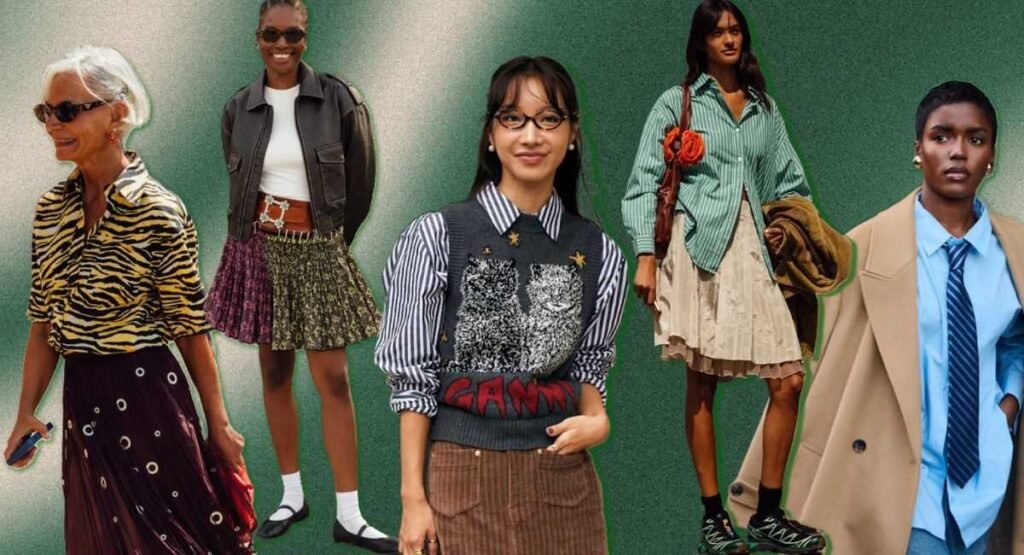
Color does much of the heavy lifting in this aesthetic. Navy, white, cream, and khaki form a dependable base, while pastels and stronger primary shades add the unmistakable energy of the decade. Preppy patterns such as stripes, checks, tartan, argyle, and polka dots can then provide visual interest without making the outfit chaotic.
Try navy with white for a crisp nautical feel, or combine pastel blue with cream for something softer. Burgundy and forest green create a more autumnal collegiate mood. If you’re wearing a bold argyle sweater, keep the remaining pieces relatively quiet. That simple rule prevents the outfit from looking like a costume.
80s Preppy Fashion for Women
Women can build an authentic look around pleated skirts, polo shirts, cardigans, blazers, tailored trousers, loafers, and structured accessories. A pastel polo tucked into a pleated skirt creates an easy starting point. Add loafers and a cardigan for a classic collegiate finish, or swap the skirt for high-waisted trousers when you want something more polished.
For a modern version, combine one unmistakably retro piece with contemporary basics. A cable-knit sweater can work with straight-leg jeans, while a vintage-inspired blazer can sharpen a simple tank and trousers. This approach preserves the 80s fashion aesthetic without making every item look like it came from the same decade.
80s Preppy Fashion for Men
Men can start with a polo or Oxford shirt and build upward from there. Chinos, pleated trousers, crew-neck sweaters, cardigans, loafers, and navy blazers provide the essential vocabulary. For a relaxed outfit, try a pastel polo with khakis and loafers. For something sharper, layer an Oxford shirt beneath a sweater and finish with tailored trousers.
Don’t overlook proportion. Modern menswear often favors narrow silhouettes, whereas vintage-inspired prep benefits from a little breathing room. A relaxed shirt, straight trousers, and slightly roomier knitwear can create that unmistakable 80s preppy style without resorting to exaggerated costume proportions.
80s Preppy Outfit Ideas You Can Wear Today
If you want a quick starting point, build your outfit around one strong preppy anchor. For example, pair a navy blazer with a white polo, straight chinos, and loafers. Alternatively, try a pastel sweater over a collared shirt with pleated trousers. Both combinations capture the collegiate spirit while remaining wearable today.
For women, a pleated skirt with a tucked polo and loafers offers a straightforward retro combination. A cardigan, straight jeans, and loafers create a softer alternative. Men can try a cable-knit sweater with chinos and boat shoes, or an Oxford shirt beneath a blazer with relaxed trousers. These formulas are simple enough for everyday dressing.
How to Make 80s Preppy Fashion Look Modern
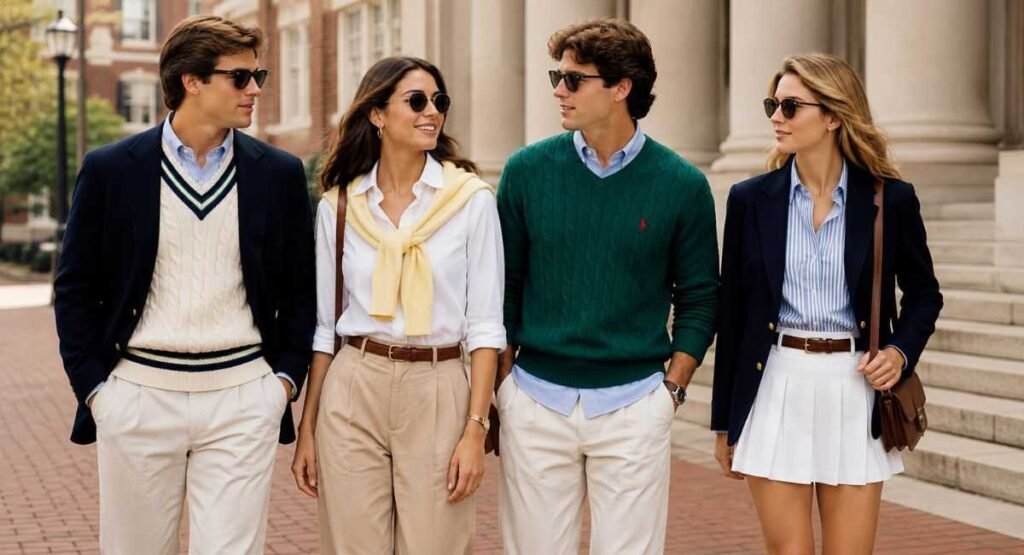
The secret isn’t recreating an entire 1980s wardrobe. Instead, combine one or two vintage-inspired pieces with contemporary basics. A cable-knit sweater can meet modern straight-leg denim, while a classic polo can work with relaxed trousers and minimalist sneakers. This modern preppy style approach keeps the nostalgia while avoiding an overly theatrical result.
You can also borrow the decade’s color language without copying its proportions. Try navy, cream, burgundy, and pastel blue in cleaner silhouettes. Add a vintage-looking belt or loafers as the finishing touch. Think of the process as seasoning: enough retro flavor makes the outfit interesting, while too much can overwhelm the whole plate.
80s Preppy Accessories That Complete the Look
Accessories should reinforce the collegiate mood rather than compete with it. Leather satchels, classic watches, silk scarves, headbands, aviator sunglasses, and understated belts can all work beautifully. These details were also highlighted in contemporary discussions of the aesthetic’s revival.
Choose accessories according to the outfit’s personality. A leather satchel suits a scholarly combination, while aviators can make a polo-and-chinos outfit feel more relaxed. If your clothing already includes stripes or argyle, keep accessories understated. The strongest preppy outfits usually look considered rather than overloaded.
80s Preppy Fashion vs. Modern Preppy Style
Traditional 1980s prep tends to feel more colorful, relaxed, and visibly collegiate than today’s interpretation. Modern prep often trims away some of those louder details and uses cleaner proportions. Still, both styles share the same foundation: polished basics, classic layering, tailored pieces, and recognizable collegiate references.
That makes the aesthetic surprisingly adaptable. You don’t have to choose between historical accuracy and modern wearability. Start with the classic foundation, then adjust the fit and accessories to suit your wardrobe. The result feels inspired by the decade rather than trapped inside it.
Common Mistakes to Avoid
The biggest mistake is treating 80s preppy fashion like a costume. You don’t need every recognizable element at once. Wearing a polo, argyle sweater, pleated trousers, loafers, oversized sunglasses, and a sweater around your shoulders can quickly become too much.
Another mistake is ignoring fit. Preppy clothing depends heavily on proportion and structure. Pieces should look relaxed where appropriate but still intentional. Finally, don’t confuse preppy with simply wearing expensive-looking clothes. The aesthetic comes from the relationship between colors, layers, patterns, and classic silhouettes.
Final Thoughts
The enduring appeal of 80s preppy fashion comes from its balance. It can look polished without becoming rigid, colorful without becoming chaotic, and nostalgic without feeling dated. Start with a polo, cardigan, blazer, pleated bottom, or loafer, then build around it with pieces you already enjoy wearing.
Most importantly, make the style yours. The best modern interpretation doesn’t imitate a photograph from 1986 from head to toe. It borrows the decade’s confidence, collegiate charm, and playful color sense, then gives those ideas a fresh place in your wardrobe.
FAQs:
What was preppy style in the 80s?
80s preppy style centered on Ivy League-inspired clothing such as polo shirts, Oxford shirts, chinos, loafers, and cable-knit sweaters.
Pastels, plaid, argyle, and relaxed collegiate layering became especially recognizable during the decade.
What does Gen Z call preppy?
Gen Z commonly uses “preppy” for a newer, playful aesthetic featuring bright colors, pleated skirts, sporty pieces, and trendy accessories.
However, this newer meaning differs from traditional preppy style, which remains associated with classic collegiate clothing.
What should I wear to an 80’s party?
For an 80s preppy party, try a polo shirt, pleated trousers or skirt, loafers, pastel colors, and a cable-knit sweater.
Add details such as a popped collar, argyle pattern, or sweater draped over your shoulders for a stronger retro feel.
When was the preppy look popular?
Traditional preppy style became especially prominent during the 1980s, when it moved from collegiate culture into mainstream fashion.
The 1980 publication of The Official Preppy Handbook helped push the aesthetic further into popular culture.